
Italian Film Festivals of Note
Complied by Laura GIACALONE
A selected list of important film festivals in Italy.
Complied by Laura GIACALONE
A selected list of important film festivals in Italy.

by Gianluca MARZIANI
The topic of which I write arrives in the nick of time (perhaps I should say in the “flick” of time in honor of the filmatic subject). What follows is a general exploration of Italian video art, the subject of a fortunate concomitance with the exhibition I have just curated for the Rocco Guglielmo Foundation. Entitled Electronic Body, the show gathers together 16 artists using the video medium exclusively to express a range of issues, approaches and visions.

by Barbara ZORZOLI
When movies first began to be mass-marketed, right after the turn of the century, actors and actresses usually looked to their own closets for contemporary stories. For period pieces, of course, a wardrobe department was necessary, but it was not until 1916 that the first costume designer was credited on film, a certain Frenchman Louis J. Gasnier.
by Laura GIACALONE
If a maverick is, by his own admission, “a filmmaker who finds a way with the system of making the films he has chosen to make”, Martin Scorsese is certainly one. From his early works, directly emanating from the ethnic melting pot of New York’s Lower East Side where he grew up, to his latest Oscar-winning celebration of the dream factory, Hugo (2011), Scorsese has worked his way up in the film industry within and outside the system, “above ground” and “underground”, in and out of Hollywood, putting onto film his deepest obsessions.
by Logan METZER
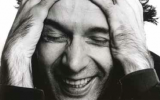
Among plebians and film-connoisseurs alike, Roberto Benigni is oft remembered for his flamboyant celebration at the 1998 Academy Awards. Clambering over chairs, reciting Dante’s Divina Commedia, and appearing in the sequel to Woody Allen’s acclaimed Midnight in Paris just tell a part of Benigni’s story and the extraordinary impact he has had on the Italian arts.

by Mauro BENEDETTI Dawn’s rays upon the Roman Forum illuminate a collage of the ages, ancient, baroque, Renaissance, and modern.

by Claudia PALMIRA ACUNTO
Italy, art – the terms are almost inextricable. The historic “greats” come to mind immediately, conjuring images of paintings and sculptures deeply embedded in our collective visual memory. But insert the word “contemporary” between the two, and the references diminish exponentially.
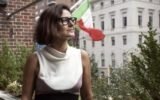
The first woman to be appointed as Italian Consul General in New York, Minister Plenipotentiary Natalia Quintavalle took her seat at the Park Avenue Consulate in September 2011. The prestigious assignment is only the last of a series of important achievements in her diplomatic career, which has seen her actively work in the defense of human rights and in the promotion of Italian culture and interests in the world.
by Gianluca MARZIANI
Italian Contemporary Art: Three words suggesting such a tangle of opposing considerations, cultural and commercial developments and widespread interests that it is quite difficult to have a comprehensive picture of it. For historical reasons and recent twisted events, the Italian art world embodies an anomalous reality, both for its well-acknowledged qualities and its congenital faults. We have a great tradition of art that the world much appreciates – this goes without saying. From Giotto to Mario Schifano, enviable talents and universal geniuses have come one after the other, producing new expressive modes and groundbreaking innovations.
by Amanda Romero
There are 89 Italian Cultural Institutes in the world – and they all participated in “Venice Biennale In The World,” a project led by renowned Italian art critic Vittorio Sgarbi to promote Italian artists internationally. In collaboration with museums, universities, organizations and the Ministry of Foreign Affairs, prominent art critics and scholars served as the judges for the 217 Italian artists nominated to show around the world. These artists’ works were also included in a video documentary presented at the 2012 Venice Biennale.